Flag Chess™·A chess variant
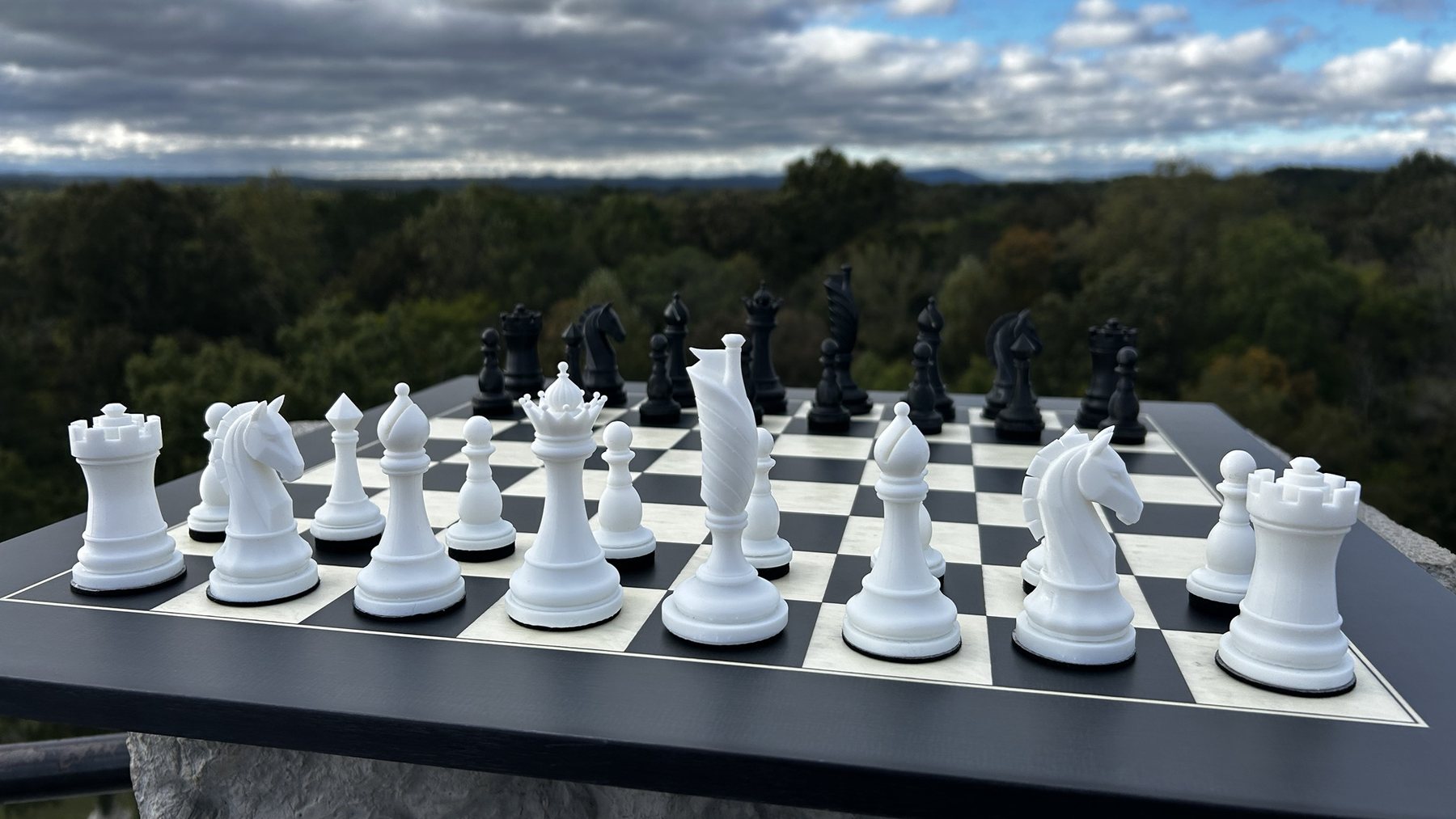
where the Flag is the sovereign
Some moves you only get once.
Burst wisely.
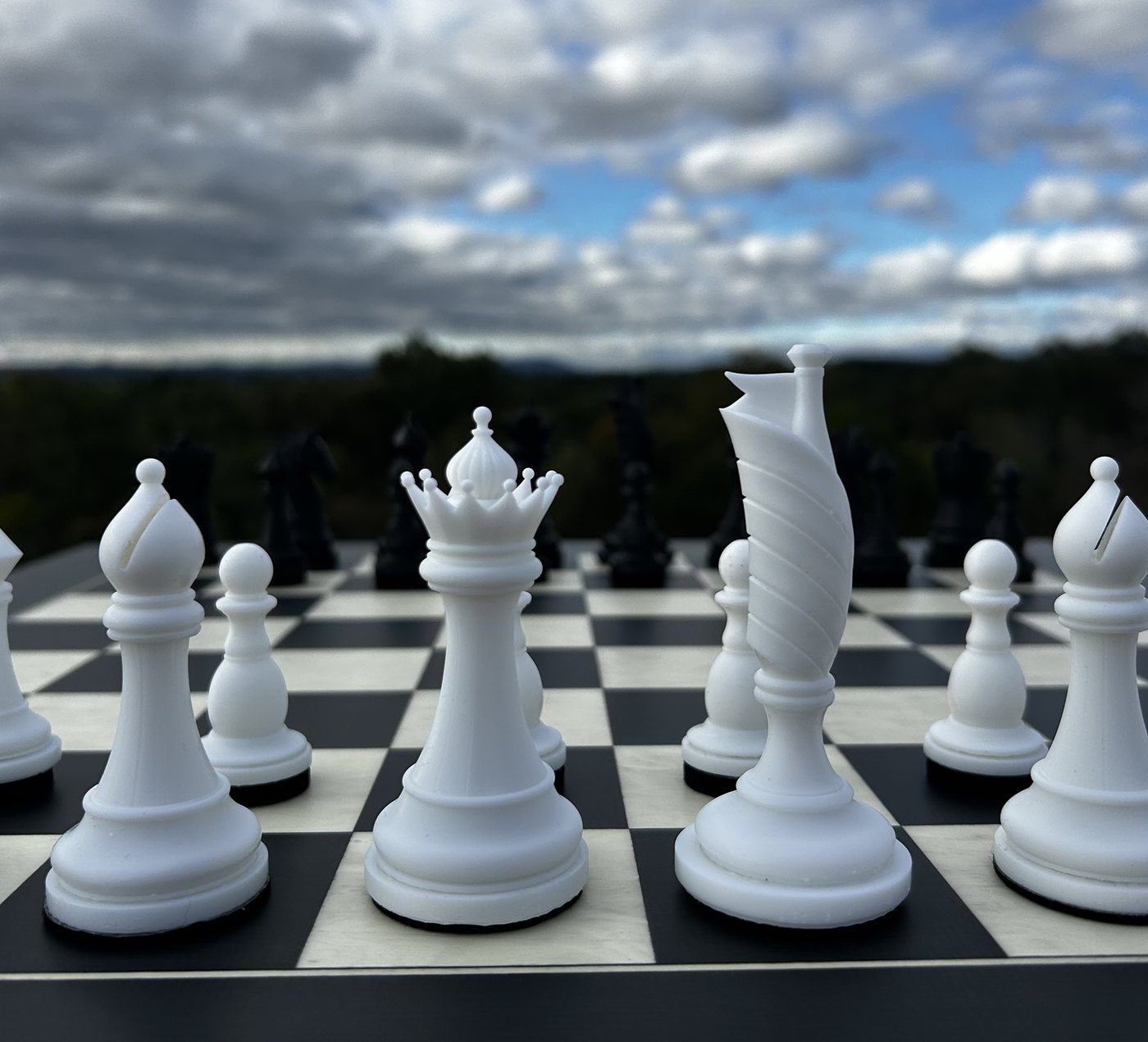
Flag Chess is a chess variant that replaces the king with the Flag, and the b- and g-pawns with two Sentinels. The Flag moves as the king did and carries one burst: a single two-square move, usable at any point in the game but never to escape check. Each starting Sentinel carries one of its own, usable only as its first move. Each burst can be used only once. Everything else is chess. The objective is flagmate.
Be the first to know when Flag Chess is available to order. We’ll only email you about Flag Chess, and you can unsubscribe anytime.
Not ready to wait? Try it tonight with any chess set.
Three things change.
Everything else follows from them.
Flag Chess is played on a standard 8×8 board. Except where these rules say otherwise, every rule of standard chess applies, and in those rules the Flag takes the place of the king. Castling works as in chess; a Flag that has moved, including by burst, may not castle.
The Flag
Begins on e1 for White and e8 for Black. Moves and captures one square in any direction. Flagmate occurs when a player’s Flag is in check and that player has no legal move that removes the check.
The Sentinel
Begins on b2 and g2 for White and b7 and g7 for Black, in place of those pawns. Moves and captures one square diagonally in any direction, staying on its color for the whole game. A pawn may also promote to a Sentinel, without a burst.
The burst
A one-time move of exactly two squares along a clear path, with no jumping and no capturing. The Flag may burst in any straight line, but never into, out of, or through check. A Sentinel may burst only as its first move of the game: forward, diagonally inward, or horizontally inward. While your Flag is in check, no piece on your side may burst, Flag or Sentinel. Once the check is resolved, bursts that were not spent or forfeited are available again.
Sentinel burst
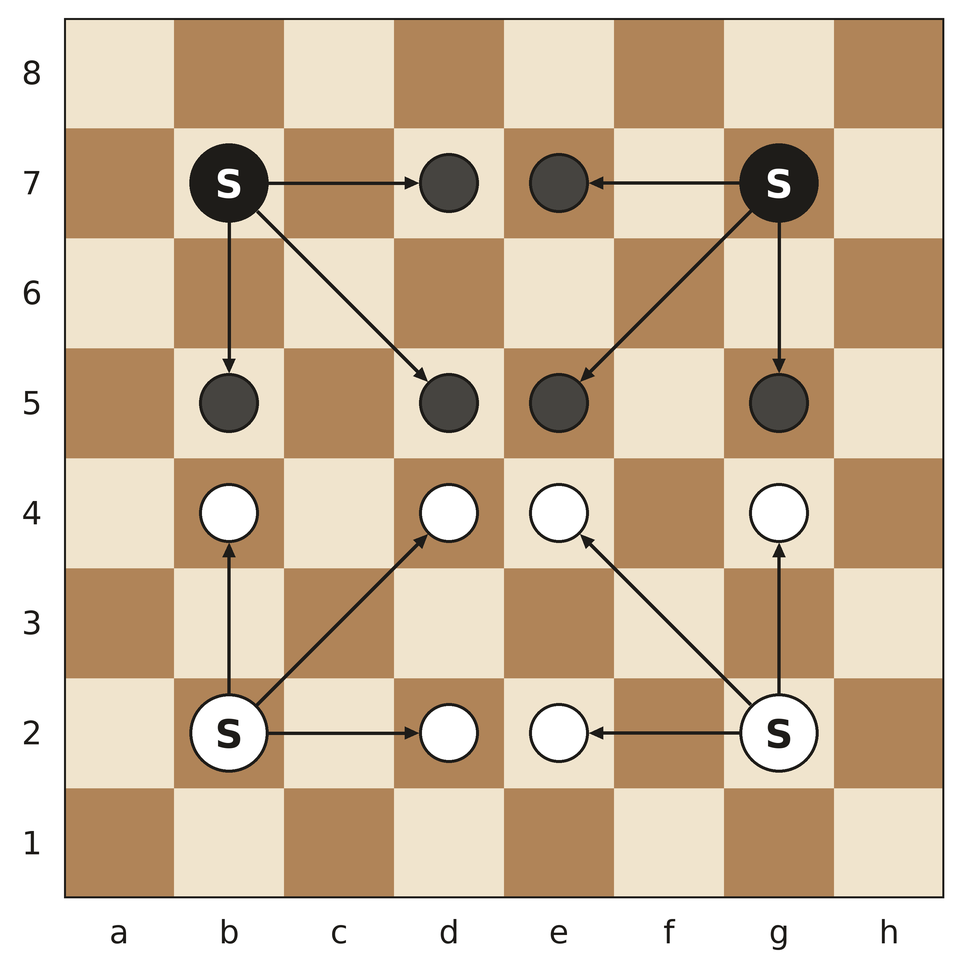
A Sentinel's burst can be used only as its first move of the game: two squares forward, diagonally inward, or horizontally inward, along a clear path, without capturing. Any other first move gives up that burst.
Flag burst
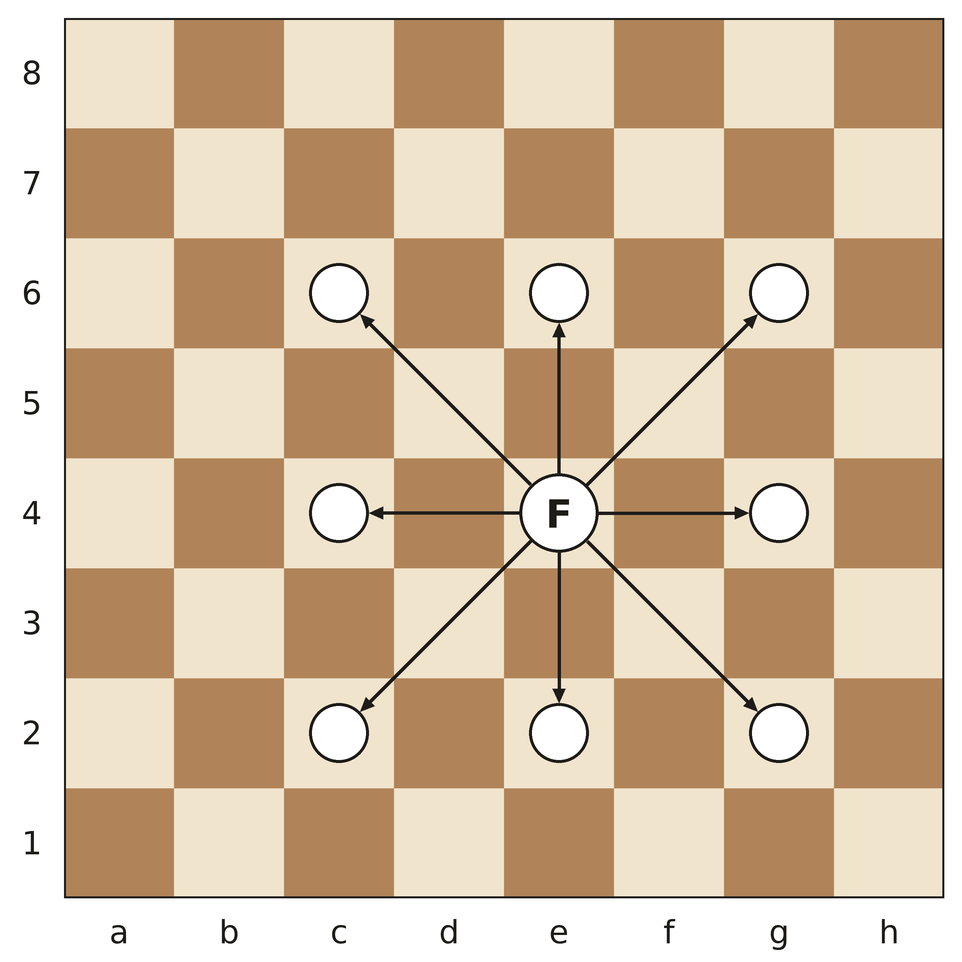
The Flag's burst can be used once, at any time in the game: two squares in any straight line, along a clear path, without capturing, and never into, out of, or through check.
Spend it, or save it.
Each burst can be used only once, and saving one means something different for each piece. A Sentinel can burst only as its first move, so saving its burst means leaving that Sentinel on its starting square; an ordinary move brings it into play and gives up the burst. The Flag can move normally and still keep its burst for later, but a saved burst is not a guaranteed escape: the Flag can never burst out of check, and the path has to be clear. Spend a burst early and whatever it bought you, you play the rest of the game without it. Save it and you keep an option you may never get to use.
The Sentinel is named for its post: a guard, standing where the b- and g-pawns stood. Its burst is like a pawn’s opening two-square step, but with choices: straight forward, or inward along the rank or the diagonal, toward the center. Otherwise it moves and captures one square diagonally, in any direction.
The opening still looks like chess. Moving the pawn in front of the Flag two squares is as natural a first move as ever, and the knights, bishops, rooks, and queen move exactly as they always have. But from the first move, every Sentinel poses a new question: burst it, move it normally and give up the burst, or leave it standing and keep the choice.
Flag Chess endgames are their own theory.
In standard chess, king-and-pawn endings are often decided by the opposition: in these positions, having to move first means giving ground. A player holding an unused Flag burst can change the opposition in a single move. Positions that are textbook draws in chess can be wins in Flag Chess for the side that saved its burst.
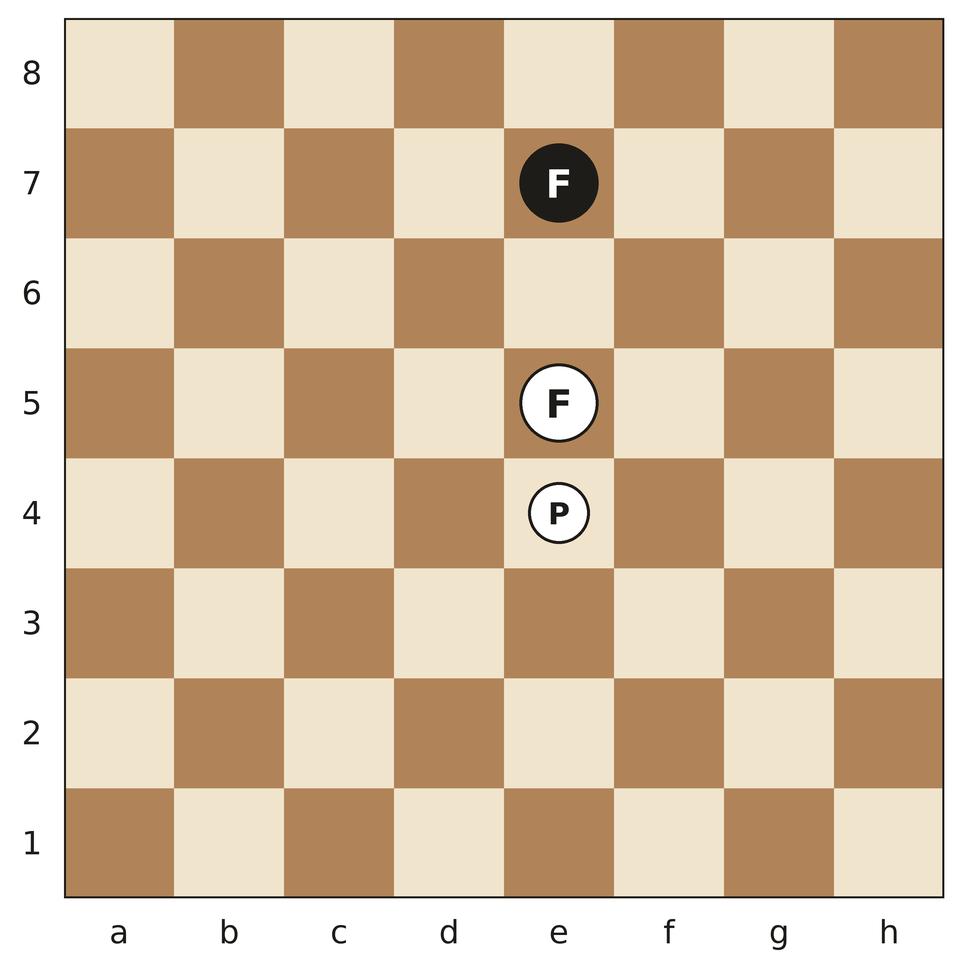
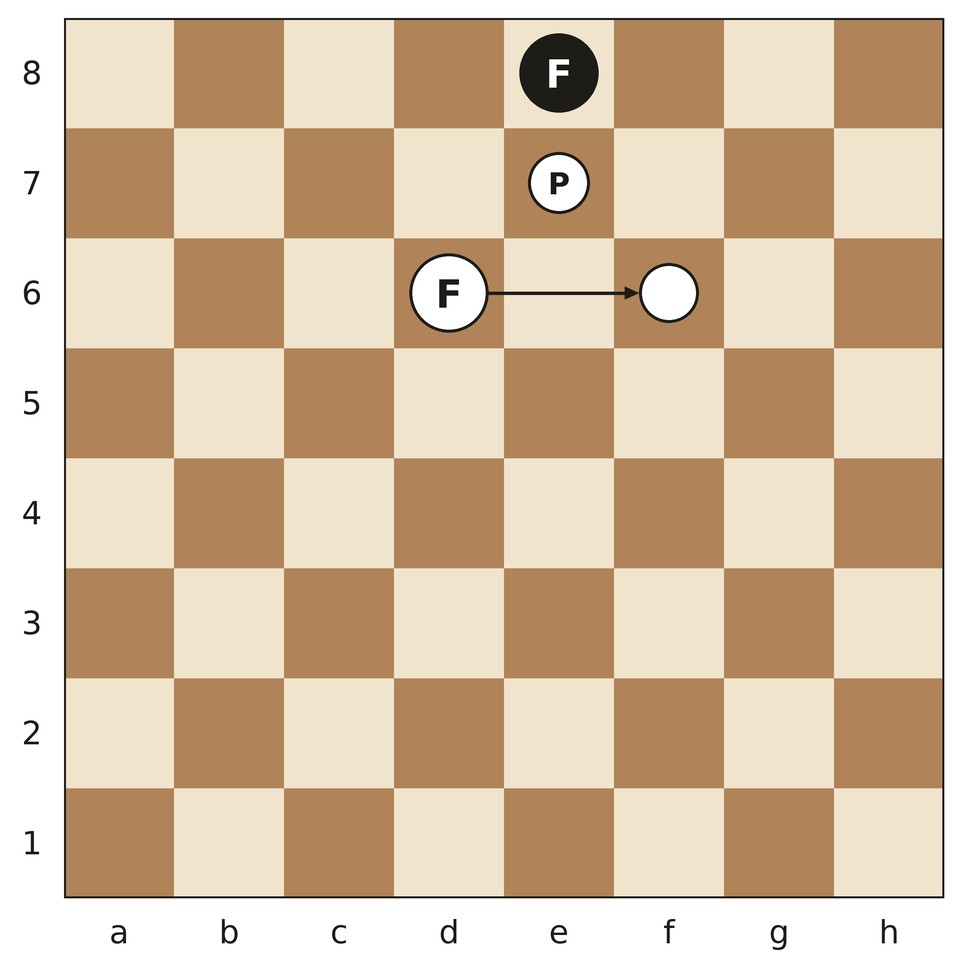
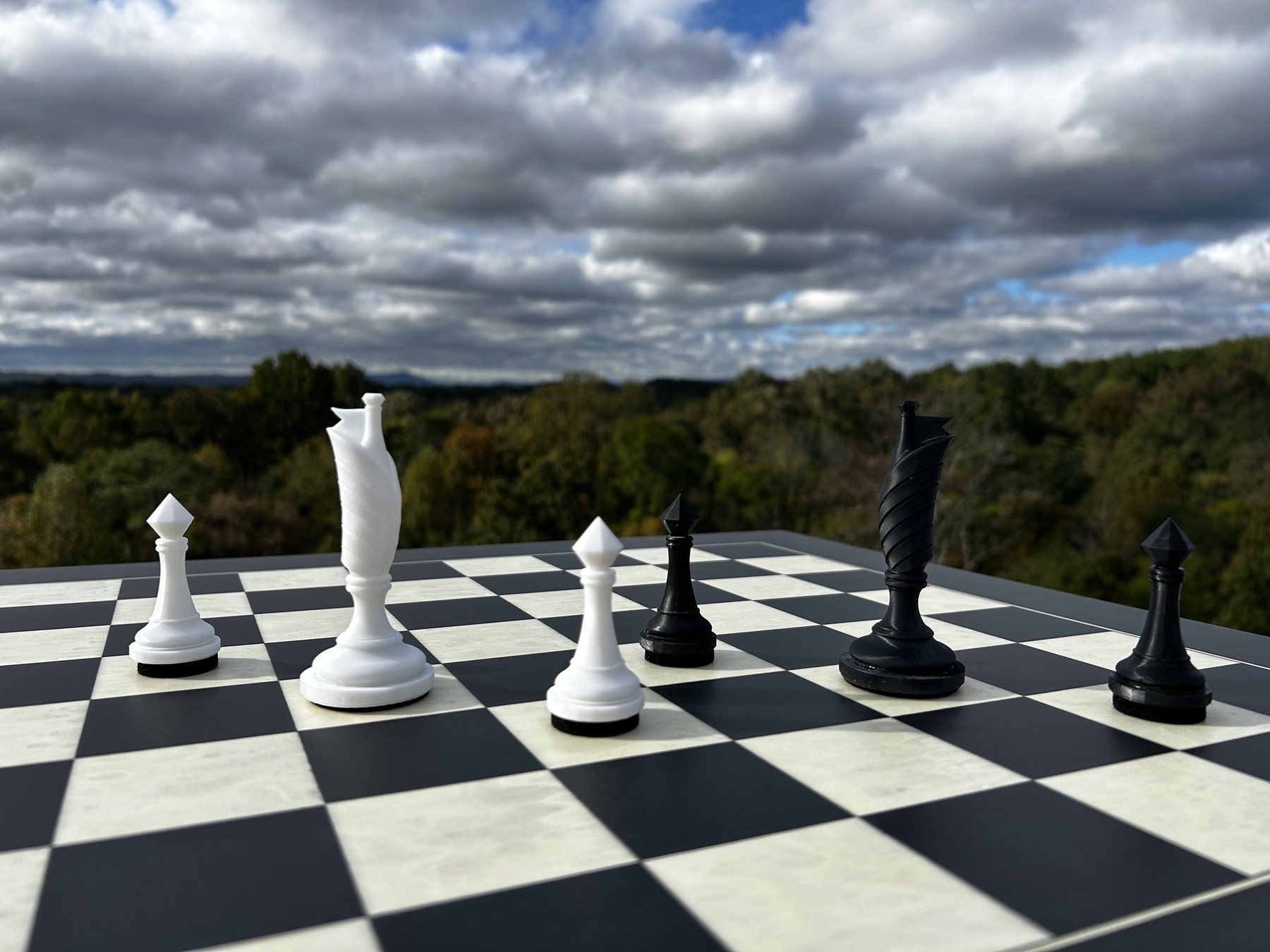
Try it tonight, with any chess set.
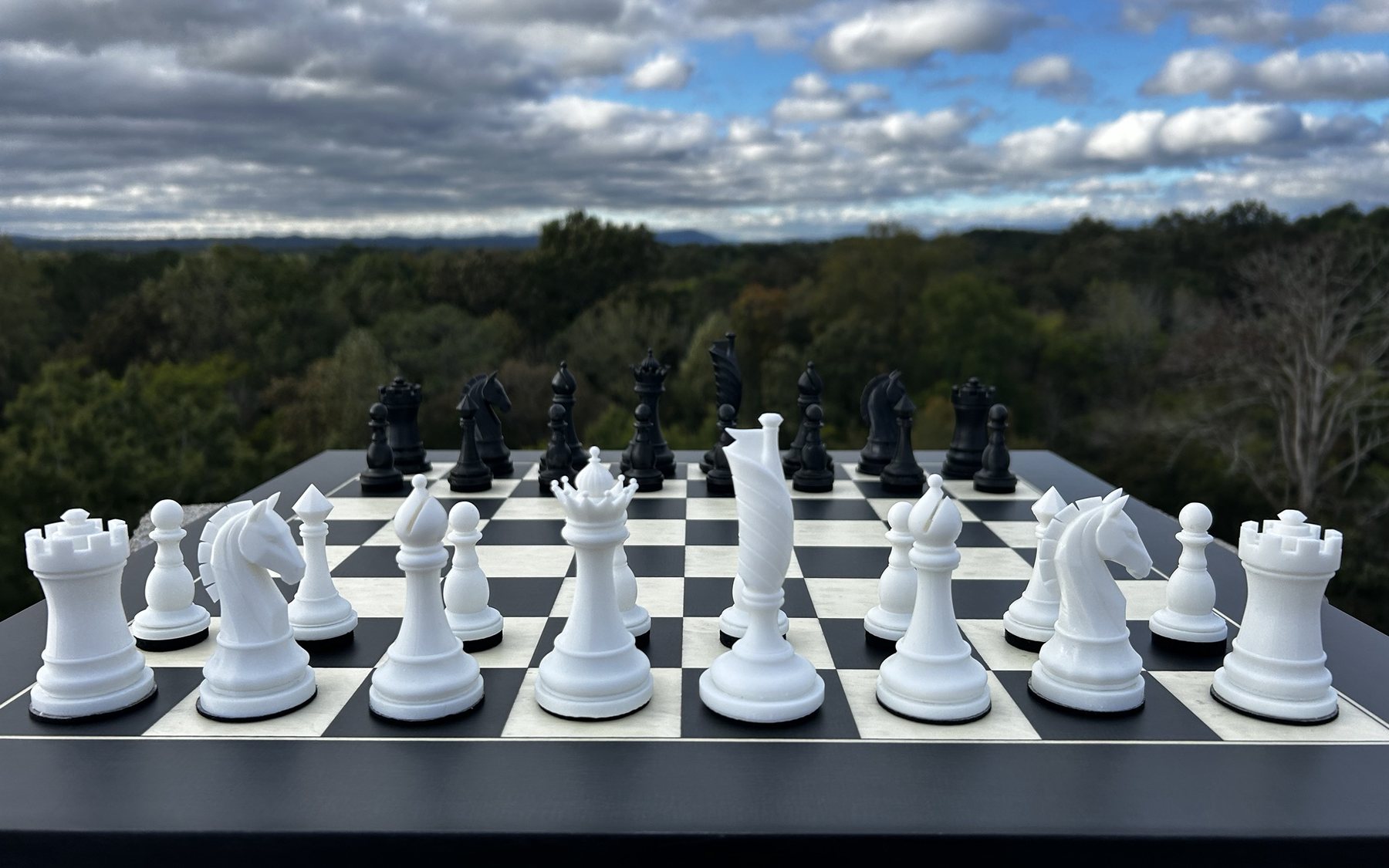
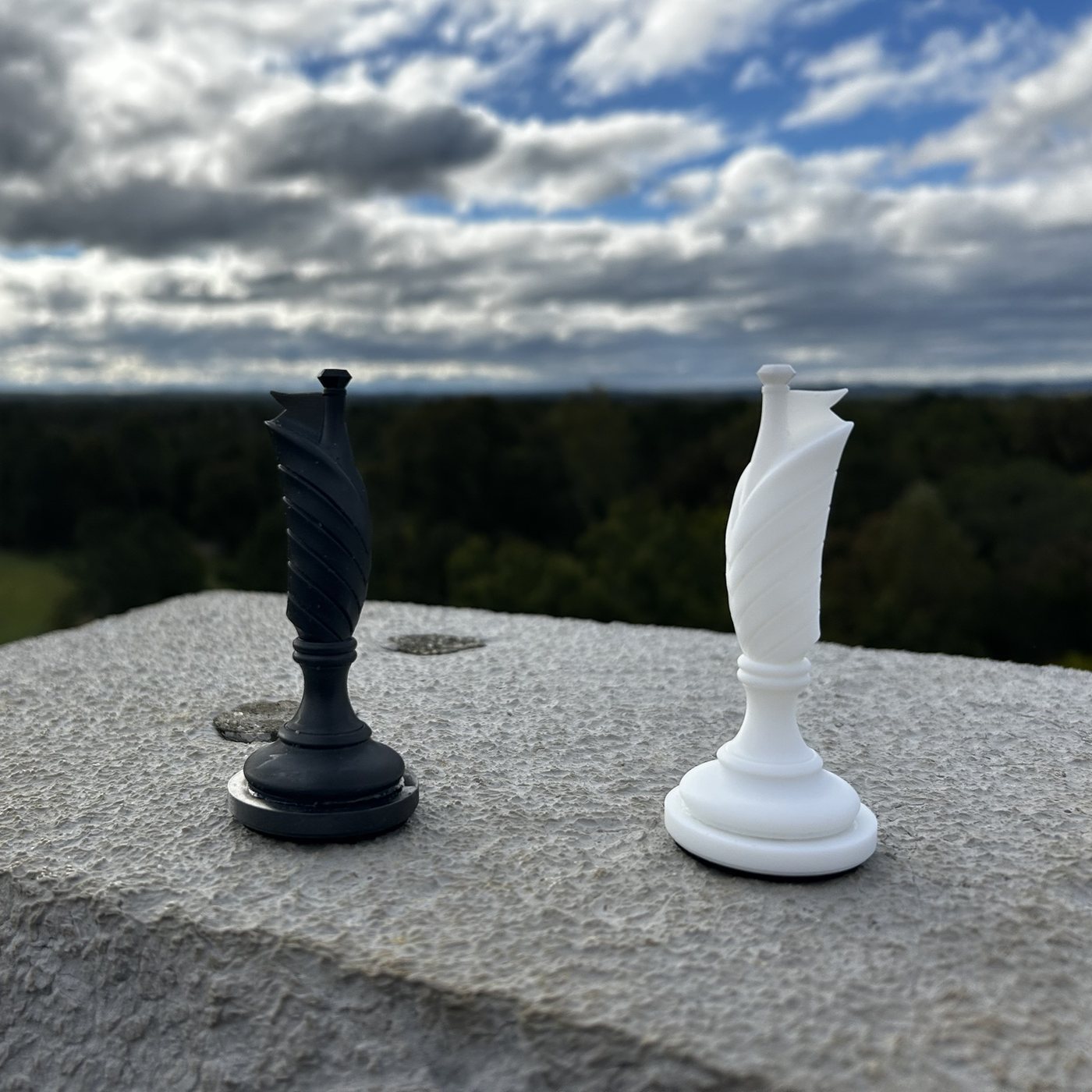
- Set up a normal game. The king is the Flag. If its crown has a notch, try turning it a quarter-turn so the notch points up the board; with my set, that made it read as a Flag at a glance.
- Mark the b- and g-pawns as Sentinels: swap in two pieces per side from another game, anything that doesn’t look like a pawn, or put a coin under each.
- Print the Quick Guide and keep it at the board.
Remember: each burst can be used only once, moves exactly two squares along a clear path, and can’t capture. The Flag can never burst into, out of, or through check.
Tracking the Flag’s burst: you set four pawns aside when you swapped in the Sentinels. When a player’s Flag bursts, that player stands one of those pawns beside the board on their side to show the burst has been used. A Sentinel needs no marker: once it has left its starting square, its burst is gone, whether it was used or given up.
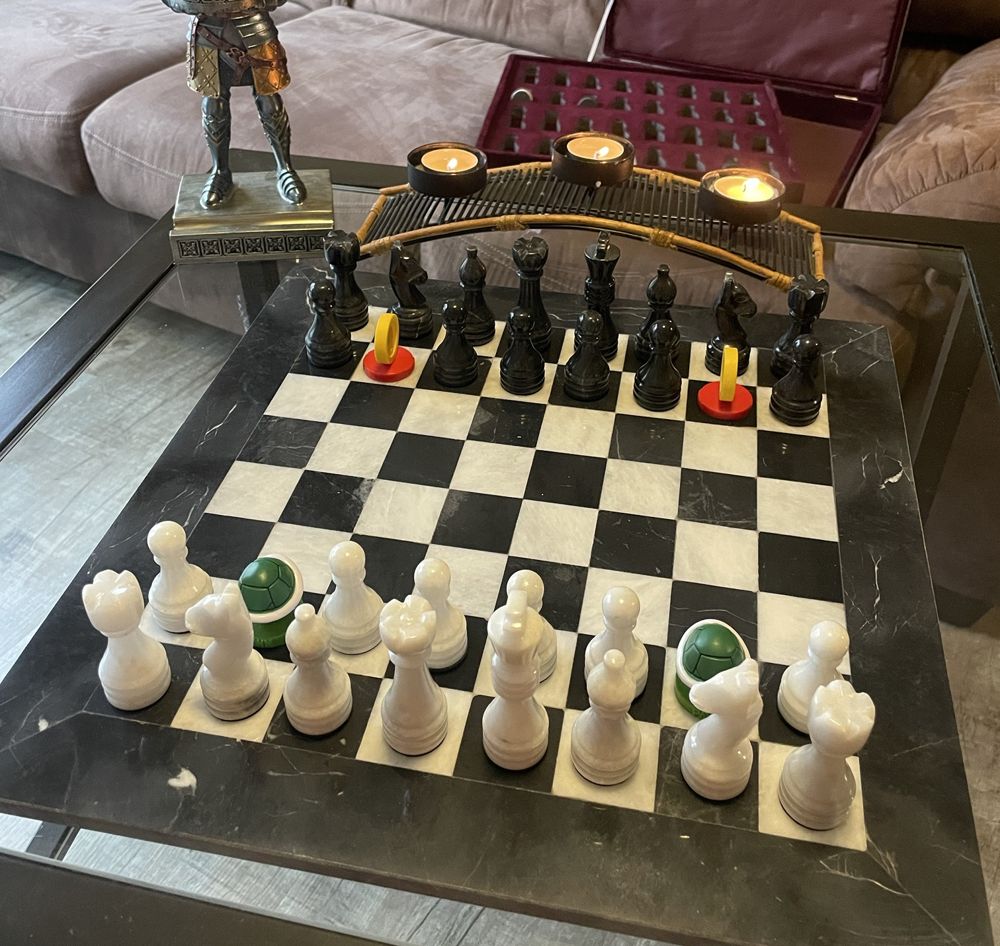
Before I had custom pieces, I playtested Flag Chess with the makeshift setup shown here. I went on to design and 3D-print the prototype pieces myself. Try a game and let me know what you think. If a rule leaves you unsure, or you think you’ve found a way to break the game, I want to hear about it: playflagchess@gmail.com
— Justin Hayes, inventor
The rules, in full.
Version 1.2, October 2026. Three documents, free to read and print. The Official Rules are the authority if anything differs.
-
Official RulesComplete rules, burst diagrams, draw conditions, and the Creator’s Note on endgames.
-
Quick GuideEverything you need at the board.
-
Official Notation StandardHow to record a game: F for Flag, S for Sentinel, (B) for a burst, # for flagmate. Includes a sample opening.
Approximate values for judging trades: Pawn 1, Sentinel 2, Knight 3, Bishop 3, Rook 5, Queen 9. The Sentinel’s figure is a working estimate.
Still in development.
Flag Chess was invented by Justin Hayes, founder of Flag Chess, LLC. The pieces shown here are prototypes.
Sets aren’t for sale yet. Leave an email and you’ll hear from us when they are, about Flag Chess only, and you can unsubscribe anytime.